

Knee Pain After Running: Why It Happens and What To Do About It
If your knee starts aching partway through a run, or nags for hours afterwards, you're dealing with one of the most common issues we see at the clinic. Knee pain after running in Lichfield is rarely a sign you need to stop running for good, but it is a sign something in your training or mechanics needs attention.
Why Runners Get Knee Pain
Running puts repeated load through the knee joint, and small issues elsewhere in the body often show up here first. Common contributors include:
A sudden increase in mileage or pace without enough recovery
Tight or weak hips and glutes that change how the knee tracks
Worn or unsuitable running shoes
Old injuries that never fully rehabilitated
Running on hard or uneven surfaces without building up gradually
What the Pain Usually Feels Like
Most runners describe a dull ache around or just below the kneecap, sometimes worse on stairs, hills, or after sitting for a while. Others notice a sharper twinge on the outside of the knee later in a run, or general stiffness the morning after training.

When to Get It Checked
Mild tightness that eases with a warm-up is common and not usually a concern. But you shouldn't ignore pain that worsens during a run, swelling around the joint, or pain that changes how you walk. If knee pain has been showing up for more than two or three runs in a row, it's worth getting it properly assessed rather than just resting and hoping it settles, as many runners across Lichfield and Burntwood have found once they got a proper diagnosis.
Things You Can Try Now
A few adjustments can take some pressure off the knee while you sort out the underlying cause:
Cut your weekly mileage back by around 20-30% temporarily
Avoid running on consecutive days until symptoms calm down
Check your shoes aren't overdue for replacement
Add gentle hip and glute strengthening rather than just stretching
These steps can help settle things down, but they don't address why the pain started in the first place, especially if it's linked to hip strength, running form, or an old injury. If this sounds familiar, it's worth getting it properly assessed rather than guessing.
How We Treat Running-Related Knee Pain
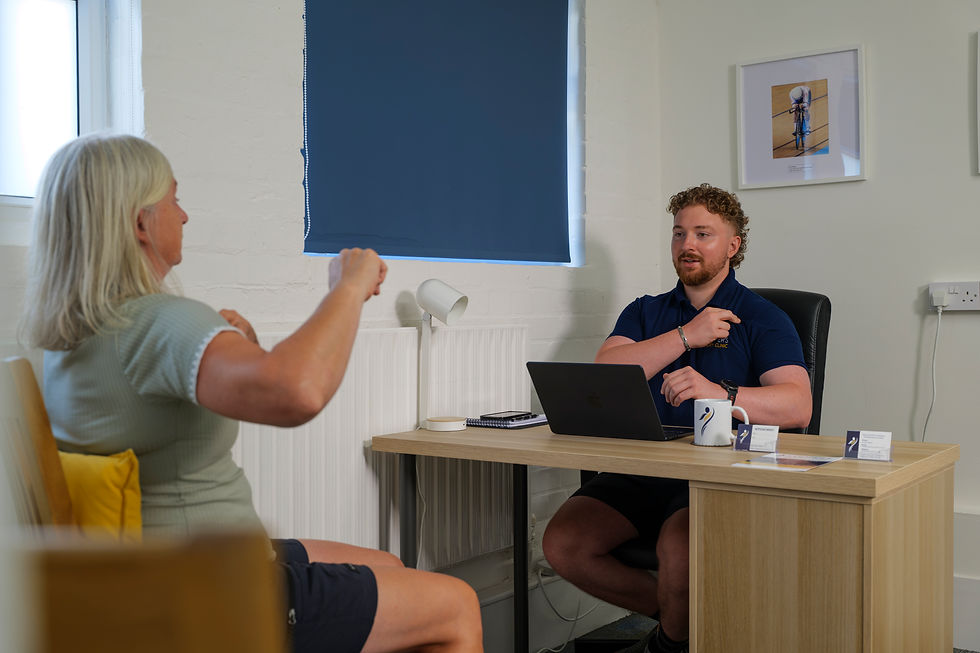
At Cooper's Injury Clinic, Dan personally assesses every new patient to identify exactly what's driving your knee pain, whether that's hip weakness, training load, or biomechanics. Treatment is typically built around a tailored sports rehabilitation plan, combining hands-on treatment with strength work so you can get back to running with confidence, not just grit through it. We work with runners from Lichfield, Tamworth, and Rugeley at every level, from weekend joggers to regular racers. Read more about Dan and the clinic.
Myth vs Fact
Myth: Knee pain means running is bad for your joints and you should stop. Fact: Running itself doesn't damage healthy knees. Pain usually points to a specific, fixable issue like training load or weakness, and most runners can return to full training once it's addressed properly.
Don't Run Through It
Knee pain after running is common, but it's not something you need to just push through or retire your trainers over. Book your assessment today at coopersinjuryclinic.co.uk/booknow and let's get you back to pain-free running.


Comments