

Rotator Cuff Injury? Here's What Your Shoulder Might Be Telling You
If reaching overhead, behind your back, or even lifting a kettle has started to feel weak or painful, a rotator cuff injury could be the reason. We see this often in patients across Lichfield, and the good news is it's very treatable once you know what you're dealing with.
What Is the Rotator Cuff, Really?
The rotator cuff is a group of four muscles and tendons that wrap around your shoulder joint, keeping it stable while you move your arm. It's small, hardworking, and - because of how much it's used day to day - one of the most commonly injured structures in the body, especially from the mid-40s onwards.
Common Causes
Rotator cuff problems tend to build up rather than appear from nowhere. Typical triggers include:
Repetitive overhead movement (painting, gardening, swimming, DIY)
A fall onto an outstretched arm
Gradual wear and tear on the tendon over years
Sudden heavy lifting, especially above shoulder height
Signs It Could Be Your Rotator Cuff
Not every shoulder ache is a rotator cuff issue, but these are common giveaways:
A dull ache deep in the shoulder, often worse at night
Weakness lifting your arm, especially away from your body
A catching or pinching sensation with certain movements
Difficulty reaching behind your back (doing up a bra, reaching a back pocket)
Strain, Tendinopathy, or Tear - Does It Matter?
Rotator cuff injuries range from mild irritation (tendinopathy) to partial or full tears. They can feel surprisingly similar early on, which is exactly why guessing at home rarely helps. If this sounds familiar, it's worth getting it properly assessed rather than hoping it settles on its own - book an assessment and we'll identify what's actually going on.
What You Can Do in the Meantime
While you wait to get it looked at, a few sensible steps can help:
Avoid pushing through pain during overhead activities
Keep the shoulder gently moving rather than resting it completely
Ice after activity if it's feeling inflamed
Steer clear of heavy lifting until you know what you're working with
How We Treat Rotator Cuff Injuries
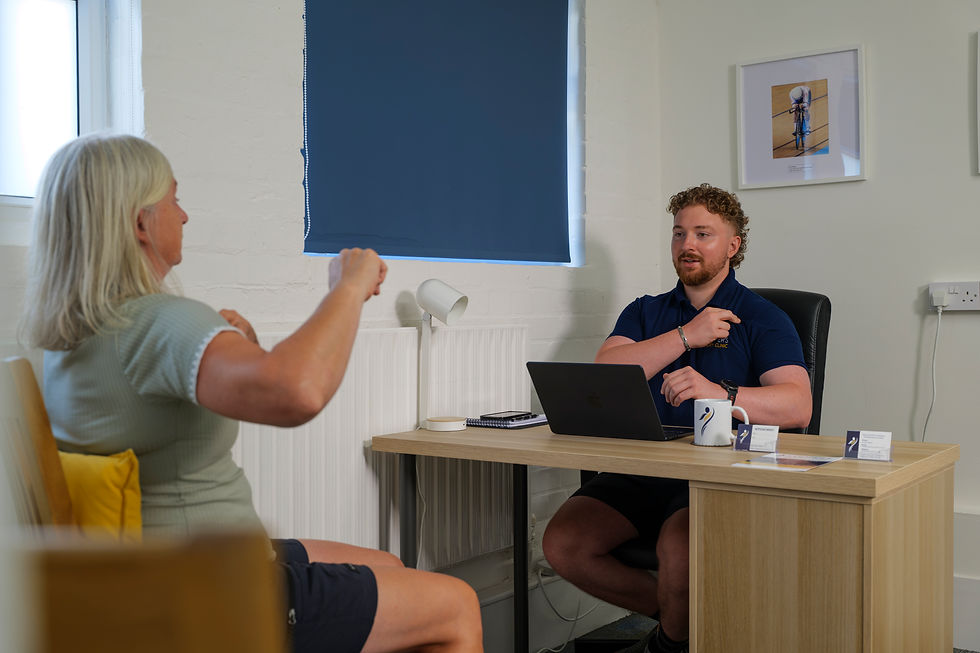
Every new patient at Cooper's Injury Clinic is personally assessed by Dan, so we can pinpoint whether you're dealing with tendinopathy, a partial tear, or something else entirely. From there, we combine hands-on treatment with a tailored exercise programme to rebuild strength and get you back to normal movement. Find out more about our shoulder pain treatment or our sports rehabilitation service, and learn more about our clinic.
We regularly help patients from Lichfield, Burntwood, Sutton Coldfield, and Rugeley get on top of rotator cuff injuries before they become chronic.
Myth vs Fact
Myth: "If I can still move my arm, it can't be a tear."
Fact: Partial and even some full tears can still allow movement, just with weakness or pain — range of motion alone doesn't rule anything out.
Myth: "Rotator cuff injuries always need surgery."
Fact: Most respond well to hands-on treatment and targeted exercise, especially when addressed early.
Don't let shoulder weakness quietly get worse. Book your assessment today and let Dan help you get your shoulder strength back.


Comments