

What Happens at Your First Injury Assessment in Lichfield?
If you've never seen a specialist before, the unknown can be half the battle - will it hurt, will you have to undress, will they just tell you to "rest and see how it goes"? If putting off booking because you're not sure what to expect sounds familiar, here's exactly what happens at a first assessment, so you can walk in feeling prepared rather than anxious.
Before You Even Arrive
You don't need a referral from your GP to see a specialist - you can book directly. It helps to jot down when the pain started, what makes it better or worse, and any past injuries in that area. You don't need to self-diagnose; that's our job. Just bring the facts.
The Assessment Itself
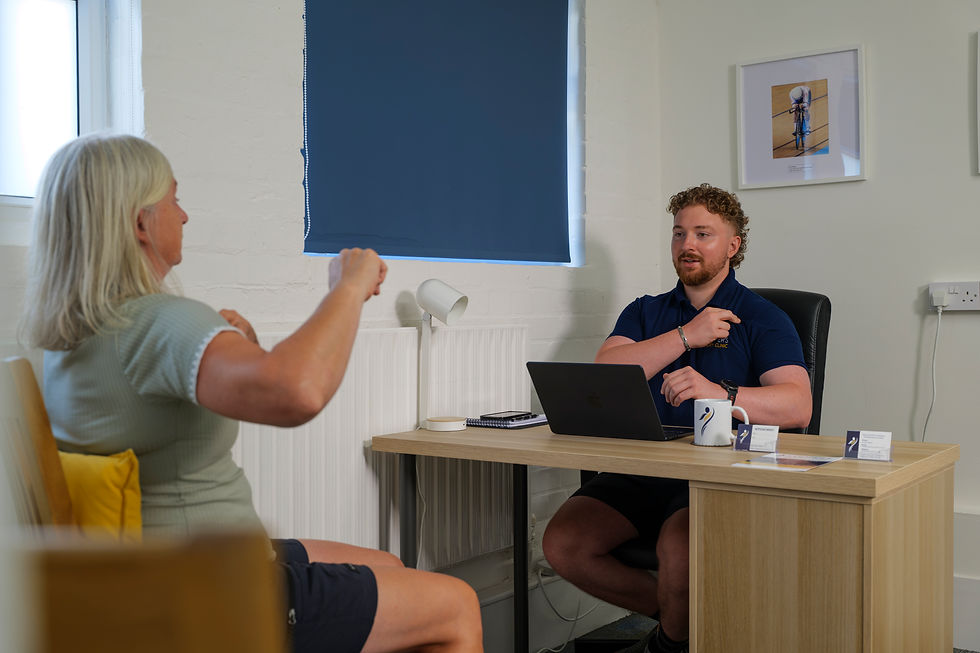
A first assessment is part conversation, part hands-on examination. Expect it to cover:
Your history — when it started, what you were doing, how it's changed since.
Your goals — getting back to running, sleeping through the night, picking up your grandkids without wincing.
Movement testing — watching how you move, where it catches, and what's compensating for what.
Hands-on assessment — checking joints, muscles, and movement patterns to find the actual source, not just where it hurts.
Pain often shows up somewhere other than where the problem started, so a proper assessment looks at the whole picture, not just the sore spot.

What You Won't Get
You won't get a generic leaflet and a "give it six weeks." A good assessment ends with a clear explanation of what's going on, in plain English, and a treatment plan tailored to you - not a one-size-fits-all sheet of stretches.
Myth vs. Fact
Myth: "Therapy is just stretches I could find online."
Fact: The value isn't the exercise itself - it's knowing which exercise, at what intensity, and in what order, based on what's actually wrong. Get that wrong and you can delay recovery or aggravate things further.
Myth: "I should wait until it's really bad before booking."
Fact: Most issues are easier to resolve early. Waiting often means more compensation patterns to untangle later.
What Happens Next
If treatment is needed, you'll leave with a clear plan - not vague advice. That might include hands-on treatment, a tailored exercise plan, or a referral on if something needs further investigation. Dan personally assesses every new patient, so you're never passed between unfamiliar faces - you're getting one consistent clinician who knows your case from day one.
If this sounds like the clarity you've been putting off getting, it's worth getting properly assessed rather than guessing what's wrong. Book your assessment and find out exactly what's going on.

FAQ
Do I need to bring anything? Loose clothing that lets you move freely, and any scan reports if you have them.
How long does it take? Most first assessments run 45–60 minutes - long enough to get a real answer, not a rushed guess.
What if you're not the right person to help? Then you'll be told that directly, and pointed toward who is.
Whether it's back pain, a stiff shoulder, or a knee that's never felt right since an old injury, the first step is the same: a proper injury assessment that tells you what's actually going on.
Find out more about Dan's approach, or skip straight to booking your assessment in Lichfield today.


Comments